
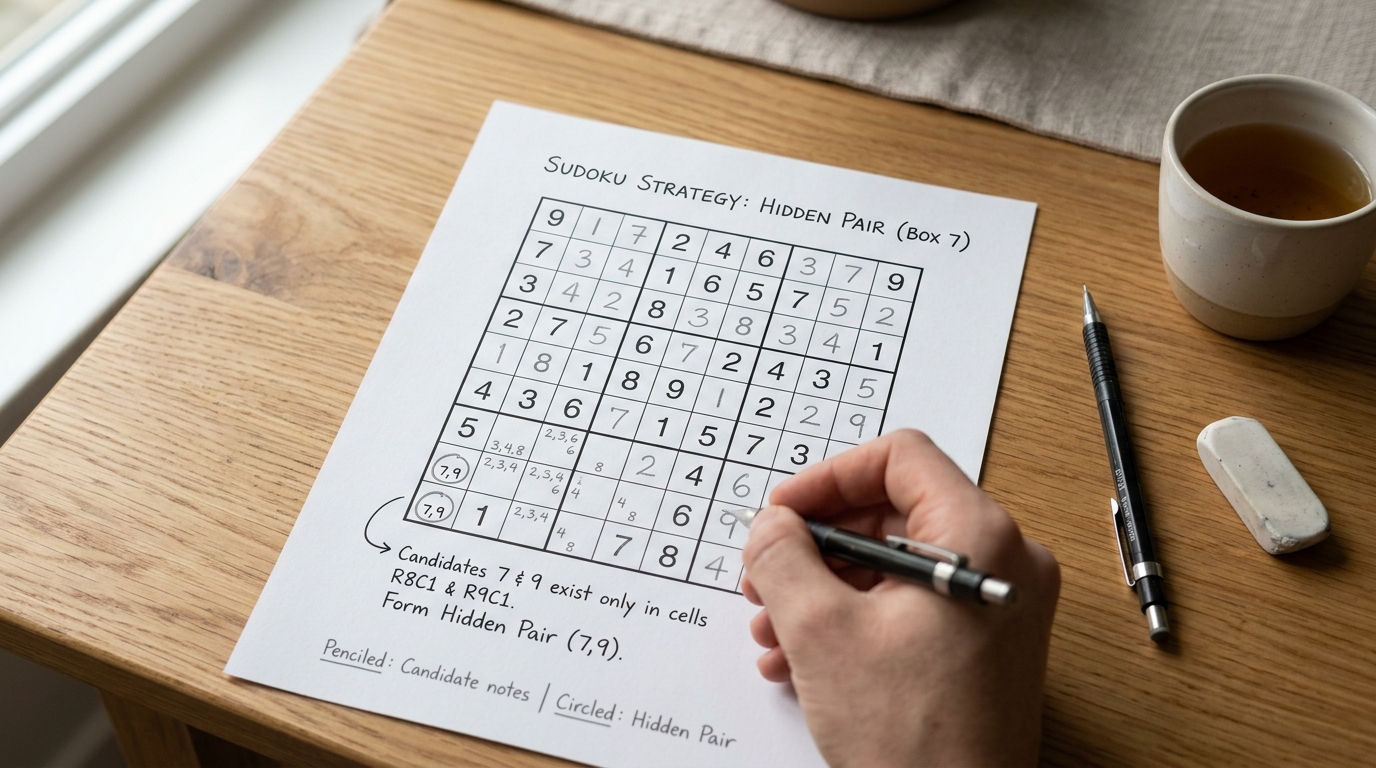
sudoku candidate cleanup is useful only if it changes the next move. A good puzzle post should feel like practical help from another player, not a lecture from far away.
On LA Times Sudoku, that means keeping the advice close to the game. The reader can play one round here, then use Easy Daily Puzzle when they want a wider shelf of daily puzzle choices.
Start locally with LA Times Sudoku main page. If the mood changes after this game, browse more puzzle games on Easy Daily Puzzle is the natural next stop.
sudoku candidate cleanup improves when small mistakes get visible
The common mistake is treating a likely number as proof. A number has to survive the row, column, and box before it belongs in the grid. Most losses or stuck moments do not begin with a dramatic error. They begin with a move that looked harmless.
A better habit is to ask what the move changes. If it reveals information, keeps space, or confirms a crossing, it has a job. If it only looks tidy, wait.
How to practice sudoku candidate cleanup without overthinking it
The best practice plan is small. Pick one habit for the next round and watch whether the game becomes easier to read. If it helps, keep it. If it does not, drop it and try another.
This keeps sudoku from turning into homework. The goal is not to master every trick today. The goal is to make fewer messy moves than last time.
- Scan rows, columns, and boxes before choosing a single square.
- Write notes only where they reduce uncertainty.
- Check every placement against all three sudoku houses.
- Move away from a stuck corner and let another section create information.
- Treat a likely number as unfinished until the grid proves it.
A real-game way to use sudoku candidate cleanup
A typical sudoku session goes wrong when the player starts chasing the one square that looks interesting. The better start is less dramatic. Read the rows that already have five or six numbers, glance at the boxes with the most filled cells, and let the grid point to the next square.
This is where sudoku candidate cleanup becomes more than a search phrase. It is a reminder to slow the first two minutes down. The beginning of a puzzle decides whether the rest of the solve feels clean or constantly repaired.
A short drill for sudoku candidate cleanup
Try one round where the only goal is clean scanning. Before entering a number, say why that number cannot go anywhere else in the row, column, or box. This small check catches many sudoku candidate cleanup situations before they become a broken grid.
If the board stalls, do not stare at the same square. Move to another box, refresh the candidates, and come back with more information. Sudoku rewards patience, but it also rewards leaving a bad corner alone for a while.
What players often miss about sudoku candidate cleanup
The missed part is usually timing. Many moves are correct in isolation but weak in order. They spend space, hide information, or solve the wrong part of the board first.
That is why plainspoken notes coach advice should sound plain. Look first. Name what the move opens. Then decide whether it is still worth making.
Why online play changes sudoku candidate cleanup
Online play also changes the rhythm. A paper puzzle naturally slows people down because every mark feels a little more permanent. On a website, it is easier to click quickly, undo quickly, and miss the moment where sudoku candidate cleanup would have helped.
Use that speed carefully. The screen is best when it makes practice convenient, not when it turns the puzzle into a race against your own attention.
A fair test is to play two rounds with one rule in mind. In the first round, play normally and notice where the board starts to feel crowded or unclear. In the second round, use sudoku candidate cleanup as the filter for every early choice. The difference may be small, but it is usually visible: fewer forced repairs, fewer blind guesses, and a calmer finish. That is enough. Casual puzzle improvement should feel like the same game with better habits, not like a new chore. If the habit feels useful after two rounds, keep it for the week and ignore everything else until it feels automatic.
sudoku candidate cleanup as a reader-friendly next step
A useful article should not end by floating away into general claims. The reader needs somewhere to go. They can try another round on LA Times Sudoku, or shift to the Easy Daily Puzzle game library when they want a different puzzle pace.
For background beyond the game page, Nikoli's Sudoku background and Conceptis on Sudoku history are worth opening. They give the game context without making the article feel like a citation dump.
What to remember about sudoku candidate cleanup
The habit to remember is simple: do not reward motion by itself. Reward moves that reveal, confirm, open, or simplify. That one filter helps across grids, cards, clues, and pieces.
That is the quiet value of sudoku candidate cleanup. The game still feels casual, but the next round has a little more shape. A player leaves with a cleaner board, or at least a clearer reason to try again.