
academic classroom Sudoku adoption provides dedicated puzzle lovers with an engaging, detailed perspective on why sudoku continues to hold an enduring place in global culture. Whether you are taking a mindful break between workday meetings, solving during a relaxing morning commute, or winding down before evening sleep, a single puzzle session creates a welcome pocket of calm deductive clarity. Here on LA Times Sudoku, our ongoing mission is to share the rich stories, structural mechanics, and practical techniques that make every round an enjoyable intellectual experience.
You can put these strategic ideas into practice immediately on the LA Times Sudoku interactive board. To discover a wider universe of daily brain challenges, crosswords, jigsaws, and classic solitary card games, visit Easy Daily Puzzle or explore our full library of sudoku puzzles on Easy Daily Puzzle.
academic classroom Sudoku adoption: the story and strategic heritage of sudoku
Over the past two decades, mathematics educators and university computer science departments have widely embraced Sudoku as a premier pedagogical tool. Teachers from elementary schools to collegiate lecture halls utilize 9×9 logic grids to teach formal constraint satisfaction, inductive reasoning, and algorithmic problem solving without relying on arithmetic calculation. In computer science curricula, writing recursive backtracking algorithms to solve Sudoku grids serves as an iconic rite of passage for software engineering students. Academic studies published in cognitive psychology journals have demonstrated that regular grid deduction strengthens working memory, spatial reasoning, and sustained focus among students of all age groups. This enthusiastic classroom adoption demonstrates that Sudoku has transcended its origins as casual newspaper entertainment to become a respected foundation of modern mathematical literacy.
Reflecting on the deeper principles behind academic classroom Sudoku adoption shows why simple games maintain such enduring power over the human mind. Behind every elegant grid, card tableau, or jigsaw layout lies an intricate balance of order and uncertainty, designed to challenge our pattern recognition and deductive faculties. When modern solvers understand these underlying principles, the game transforms from a casual pastime into a deeply satisfying mindful practice. Every round becomes an opportunity to refine your approach, test your hypotheses, and experience the quiet joy of finding the right move.
Historical records and trusted sources behind academic classroom Sudoku adoption
Separating documented puzzle heritage from popular hearsay requires consulting authoritative historical and gaming records. For readers eager to examine archival rulebooks, championship history, and technical analyses, reference materials such as Nikoli official Sudoku history and World Puzzle Federation logic competitions offer exceptional factual depth. These trusted publications document the creators, innovators, and international communities who have nurtured these games over centuries. Whether you are researching tournament scoring systems, mathematical proofs, or cultural origins, verified sources ground our modern play in enduring traditions.
How academic classroom Sudoku adoption guides player decisions in real games
Imagine opening a demanding grid and spotting a three-by-three box with only three empty squares. The immediate temptation is filling in the first candidate that comes to mind just to make visible progress. Applying academic classroom Sudoku adoption reminds you to pause and scan every intersecting row and column for subtle forced constraints. Taking twenty thoughtful seconds to prove a candidate mathematically prevents an erroneous placement that could derail your entire solve ten minutes later.
Expert solvers never treat Sudoku as a guessing game. When you let verified logical eliminations guide your choices, the entire grid begins to unfold with reassuring predictability. Your eyes naturally begin to detect hidden singletons and locked pairs across distant boxes without needing to clutter the squares with distracting pencil marks.
Essential player habits connected to academic classroom Sudoku adoption
- Prioritize scanning rows, columns, and boxes with the highest count of given digits.
- Verify every prospective placement against all intersecting constraints before committing.
- Use candidate notes as an active elimination filter rather than passive decoration.
- Take short mental pauses when a box stalls, allowing fresh perspective to reveal simple singles.
Why clean visual design elevates academic classroom Sudoku adoption
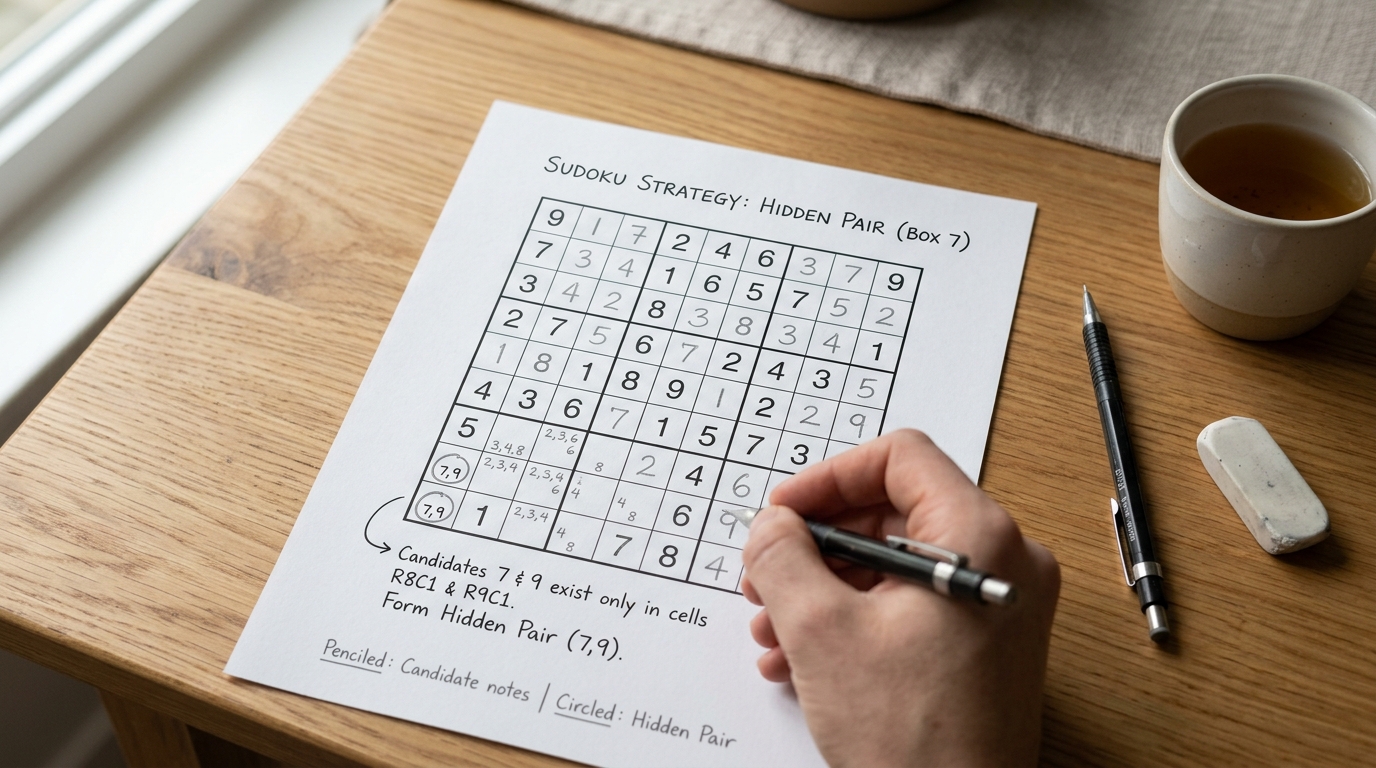
A clean, distraction-free visual presentation is essential for enjoying sudoku on modern devices. The featured illustration accompanying this article has been selected to showcase the focused, calm atmosphere of deliberate play. Pairing clear visual graphics with descriptive alt text highlighting academic classroom Sudoku adoption ensures that solvers can comfortably connect theory with on-screen action. Whether you are playing on a high-resolution desktop monitor or a compact mobile screen, sharp contrast and thoughtful interface design keep your focus squarely on the pleasure of solving.
Taking your next step with academic classroom Sudoku adoption
The most enjoyable way to appreciate the power of academic classroom Sudoku adoption is to dive into an actual round today with these fresh insights in mind. Head over to LA Times Sudoku for a relaxing, high-quality session where thoughtful strategy replaces rushed guessing. Whenever you want to expand your puzzle horizons with fresh daily challenges, explore the comprehensive Easy Daily Puzzle library for endless daily mental stimulation. Every completed puzzle is a testament to the timeless joy of clear logic, patient observation, and a well-played game.