
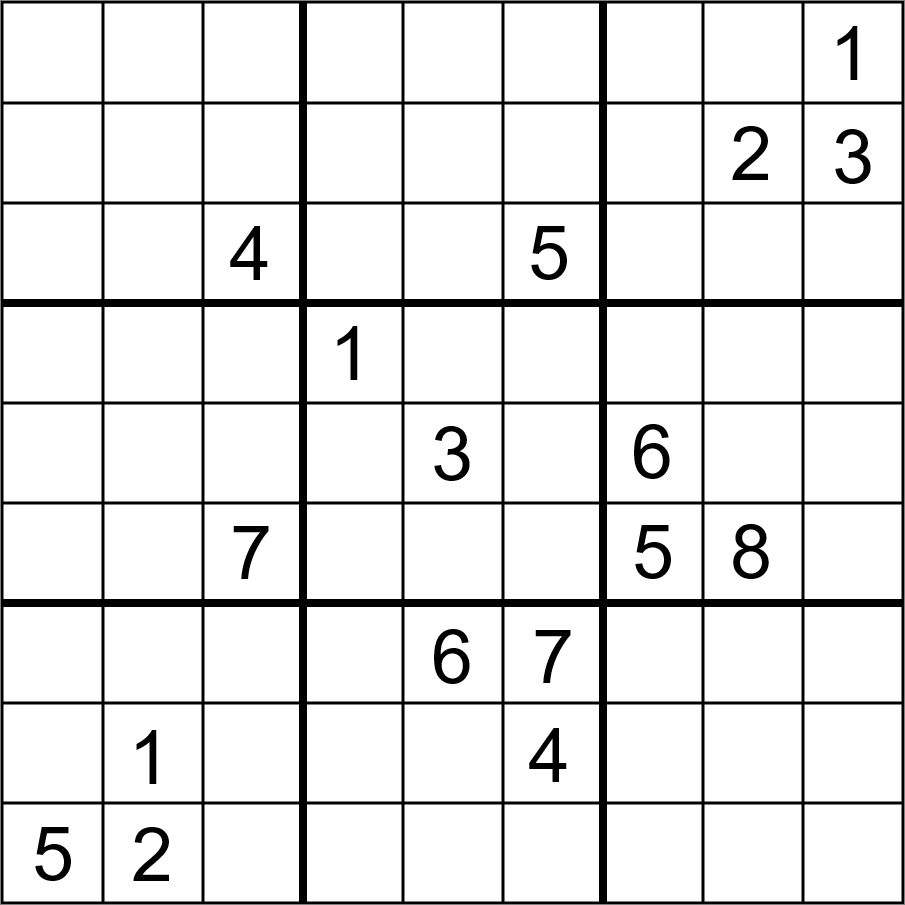
La Times Sudoku rewards a small change in attention. The best daily solve is not always the fastest one; often it is the session that leaves the player feeling more alert than when it began. Players often lose time not because the puzzle is impossible, but because they keep looking at it in the same order. A better routine creates a short pause, identifies the strongest evidence, and then makes a move that leaves the next choice easier. That is a practical skill, not a performance trick.
La Times Sudoku in practice
Start with a full scan, not a favorite trick
The most useful Sudoku strategy is often the least dramatic one: scan the whole board before choosing a favorite technique. Look for nearly complete units, repeated candidate positions, and boxes where one digit has very little room. This first pass tells you where the information is concentrated. It also keeps you from spending five minutes on a square that cannot yet be decided.
A fixed order helps. Check rows, then columns, then boxes, and return to any unit changed by a confirmed entry. Over time the order becomes automatic, which is why good players can look relaxed while still moving quickly. Their eyes are following a routine rather than searching randomly.
Make notes earn their space
Pencil marks are useful when they shrink the problem. They become noise when every empty cell receives a tiny list that is never cleaned up. Write candidates in a consistent position, remove them after every placement, and stop when a direct deduction appears. Clean notes make pairs and locked candidates easier to see and make mistakes easier to trace.
If you get stuck, do not immediately add more guesses. Re-scan the last three changes, check whether a candidate was left behind, and look at the row or box with the fewest options. A short reset often reveals more than a dramatic new technique.
Turn practice into a quiet measurement
Notice whether your first scan improves, whether you erase fewer entries, and whether you can explain why a placement is legal. Those are real signs of progress. Open a daily Sudoku board on Easy Daily Puzzle and browse more solving ideas on this site. The World Puzzle Federation is a useful external reference if you want to see how serious puzzle solving is organized.
A practical habit to try today
Before the next board, decide what counts as evidence. A single candidate left in a unit is evidence. A number that merely feels comfortable is not. This small distinction keeps the solve honest and makes a later review possible. When a puzzle goes wrong, you can return to the first unsupported choice instead of blaming the entire board.
Give the opening a fixed amount of time. Scan the rows, columns, and boxes once, then begin with the area that has the fewest legal options. If the scan produces nothing, that is useful information too. It tells you to switch from direct placements to candidate notes rather than forcing a move. The board is not asking for speed yet; it is asking for a better question.
After every confirmed digit, revisit only the units it touches. This keeps the work light and prevents the common habit of restarting the whole scan after every move. Small loops are easier to maintain than a dramatic full-board search, especially on a phone where visual fatigue arrives quickly.
When you finish, write down one observation instead of only the time: a box you missed, a note you forgot to erase, or a moment when waiting helped. Then try another daily puzzle on Easy Daily Puzzle or search this site for more sudoku guides. A useful routine grows from those small observations.
The small detail worth remembering
A puzzle session becomes more satisfying when the player can explain one decision afterward. It might be a hidden single, a careful box scan, or simply the moment they chose not to guess. Explanation turns a completed board into practice that carries forward.
That is the durable appeal of a clean grid. The rules stay fixed, but the player’s attention keeps getting more precise. A few quiet sessions are enough to make the next board feel less like a wall and more like a conversation with evidence.
If the board feels difficult, lower the speed before lowering the standard. A slower scan with honest notes usually teaches more than a quick guess followed by a long repair.
For a little more context, read Nikoli’s Sudoku background and TIME on Wayne Gould and Sudoku’s spread. These references are useful for checking the basic history or rules without turning a daily game post into a long reference list.